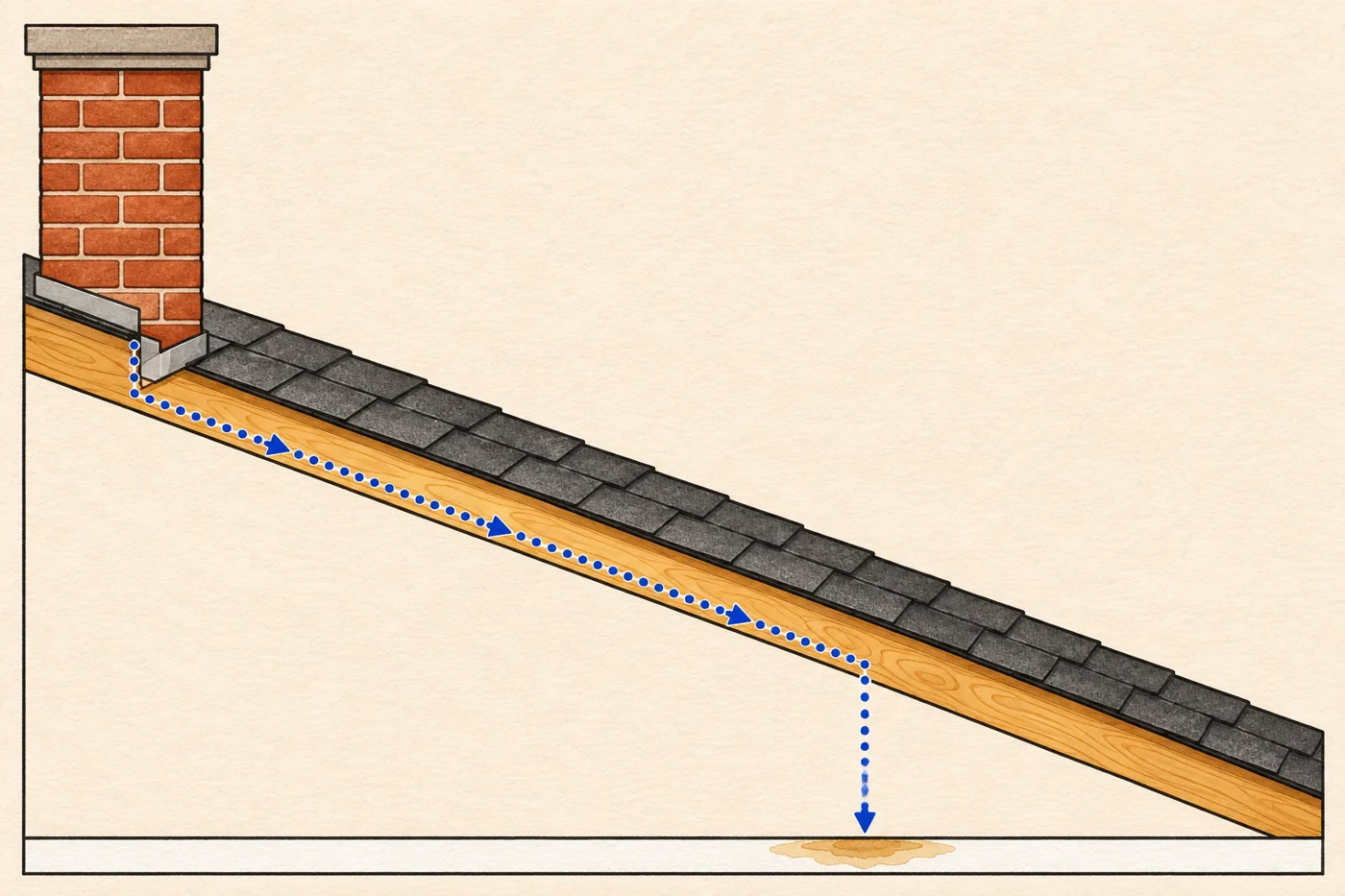
One possible path from flashing to ceiling
Picture wind pushing rain against the side of a house where it meets a sloped roof. If an opening lets water behind the flashing, water may follow the underside of the deck or an adjacent rafter. It can drip off at a lower point and wet insulation above the ceiling. The first mark the homeowner notices could be across the room from that wall.
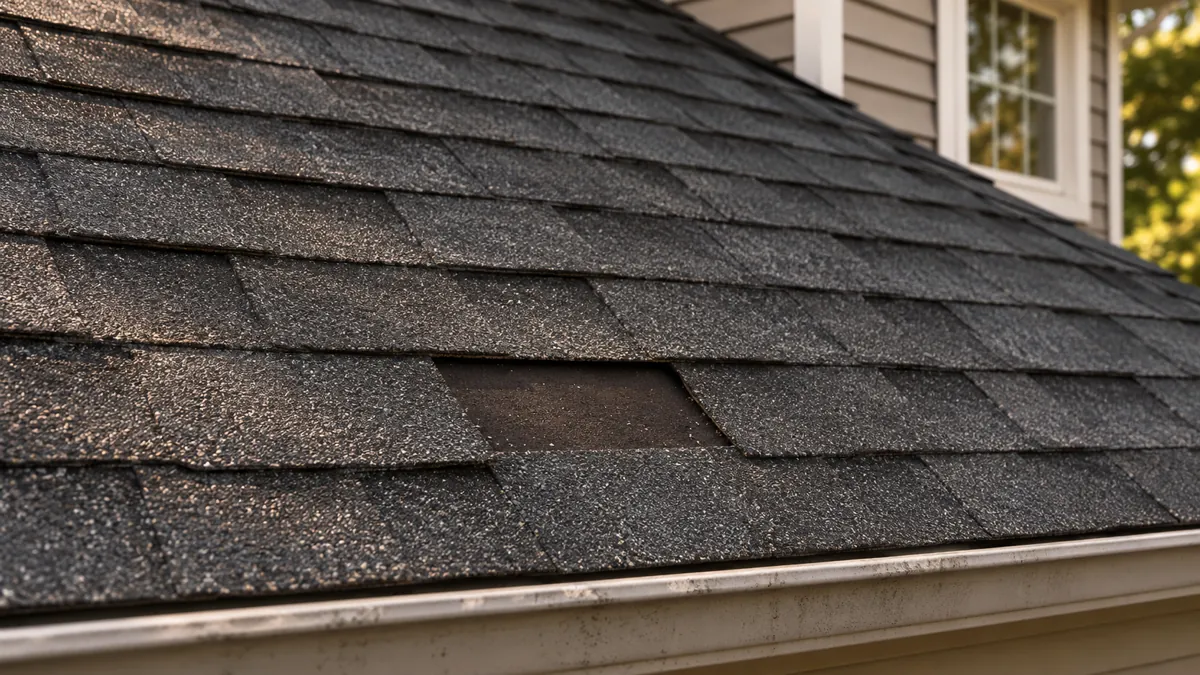
That is an illustrative path. A chimney, a skylight, a plumbing vent or another roof joint could give water a different route. IKO's guide to locating roof leaks explains that the source may be several feet away from the visible drip and lists common roof features an inspection may include.
What timing can tell you
A stain that darkens only during wind-driven rain gives an inspector a weather pattern and a direction to check. Note the storms when it happens and when it stays dry. If the ceiling gets wet on clear days, mention plumbing fixtures above it or nearby equipment that produces condensation. If moisture appears during a thaw, report ice or snow buildup you saw safely from the ground.
None of those patterns identifies the opening on its own. The useful clue is the change over time. A dated photo of the same spot after each storm can show a change that is easy to miss on an inspection day.
Give the roofer a location that translates outside
- Name the room and floor, and identify the closest exterior wall or upstairs fixture.
- Photograph the wider ceiling first so a door or light fixture establishes the location. Take a closer detail of the stain separately.
- Describe rain direction, wind, snowmelt or nearby plumbing use when the stain grew.
- Say if the stain is dry to the touch, actively dripping or associated with a soft or sagging ceiling. Avoid touching a wet fixture or standing under a sagging area.
Handle the moisture before closing the ceiling
Address the entry point, then assess the wet materials. EPA moisture guidance recommends drying water-damaged materials promptly. Arrange help promptly if the damage spreads or affects electrical components. A dry-looking painted surface can still leave a question about insulation or the other side of the ceiling.
Tell the roof repair team when the stain appears and which exterior wall or roof feature lines up with it. For the interior sequence, read the guide to drywall after a roof leak.